Spirituality

Turning Point

Many years ago when I was in college, I took a theology course on Spirituality. The professor, Fr. Gibbons, was also a columnist for a Catholic magazine called Sign. It is a magazine that my parents subscribed to so I was familiar with his work. Fr. Gibbons assigned a few papers to his students on Turning Points. Those moments, events or set of circumstances that took us from a direction, a trajectory, and served as a paradigm shift, that is, adjusted our course to some degree. Naturally some turning points were dramatic, say if a parent or sibling died and the family was thrown into some level of chaos, or, the more subtle events that, over time, re-calibrate a direction we might have assumed we were on. Dramatic or subtle, turning points are change.

I vaguely recall what I wrote about for my paper, but what I do remember is what the course taught me. Fr. Gibbons told this class of college students that it often takes the distance of twenty years for us to recognize our turning points, and, since I was probably about 19 at the time, I didn’t have the full benefit of reflecting what changes were turning points for me, other than my birth. My point is, Fr. Gibbons was not only teaching us as his current students, he was giving us the gift of a way of looking at life to take us into the future.

I mentioned that my parents subscribed to the magazine in which my professor was a regular columnist. Along those lines, I share that the family I grew up in subscribed to many publications, many Catholic magazines, many secular, like Time Magazine and The New York Times. In fact, it was an article in Time magazine where I first encountered the term' ‘banality of evil’, coined by Hannah Arendt. She was writing on the rise of Nazism in Germany leading up to and culminating in World War II. Pardon me, I misspoke. Culminating is the wrong word. If we thought Hannah Arendt was speaking only of long dead history, we would be wrong. Her term ‘banality of evil’ was a warning that evil, such as fascism, sneaks up on us. When we let a racial/ethnic/sexual orientation slur go, for example, we are sliding into the mindset that it is okay to disparage those we consider ‘less than’. There are a million little ways we can let fascism grow and then one day a maniac loudly spouting hatred gets elected President. And people who should have known better, people who studied history and the Constitution, the Federalist Papers and the Civil War; people whose fathers and grandfathers fought in WWII somehow twist their little minds enough to vote for him. And, wow!!, now many of those same people who are too smart to deny that they knew what they were doing and voted, not once, but twice, for a wannabe dictator, still, somehow, absurdly, defend him and defend his literal, violent and deadly attack on The Capitol.

So, here I am. At a turning point. I watched in horror, as many did around the world, on January 6th— Feast of the Epiphany no less—when all the hatred that had been shouted for more than four years from the biggest bully pulpit in the world was made manifest in the incitement and in the deadly rioting played out in full costume by a mob. Anyone who read James Madison knew one of his biggest fears was that this new country, this experiment in democracy, would devolve into mob rule. And here, in living color, the head of the mob is an orange coward who didn’t even risk muddying his own shoes in the shit storm he unleashed, gleefully dancing with delight in the safety of the White House, watching from a television. What a hero this mob bowed down to! What a prize to sell your soul for!

As far as having at least twenty years to process all the many turning points in my own history, well, I have the benefit of three sets of twenty and a continuous education in history, theology, philosophy and living to allow me to realize that I cannot associate with Nazis. A deep and wide line was crossed not only on November 3, 2020 when the orange clown lost the election yet the noise and lies continued, echoed and abetted by many fools and cunning power grabbers, but the events of January 6, 2021 opened an abyss.

To those on the side of the abyss who support fascism and a wannabe dictator, I must bid you adieu. This may be impolite of me, since I have been friendly with many of you for years, and some, to my heartbreak, I happen to be related to. It is difficult. But if you were brandishing a swastika on an armband, it would make this break easier.
How Do You Like 'Dem Apples?

Man, having been wounded in his nature by original sin, is subject to error and inclined to evil in exercising his freedom. (Catechism of the Catholic Church section 1714)

My formal introduction to religious education began at the tender age of five in 1963 under the guidance of the Sisters of St. Joseph. Vatican II was still in session and Original Sin featured on the syllabus for the boys and girls in grey plaid wool and serge, sitting attentively (ahem!) in long rows of desks that doubled as shields against Russian atomic bombs. 

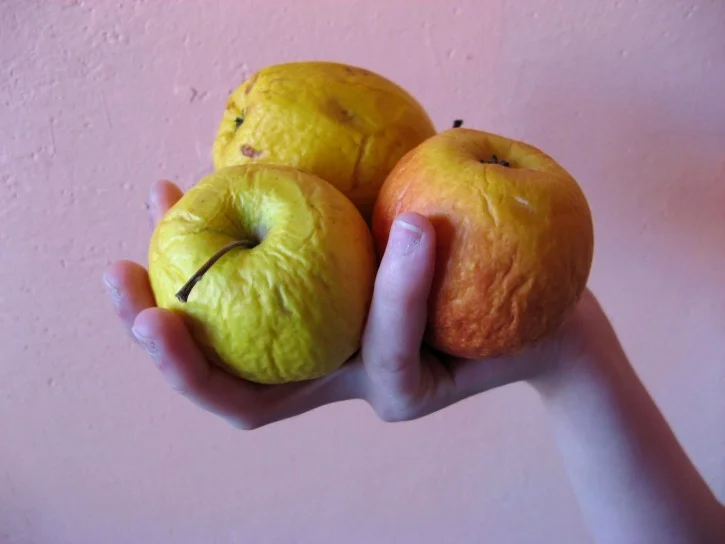
By the time high school and college rolled around to the Pepsi Generation Seventies, Original Sin was barely a whisper. In the Enlightened Eighties when I was busy turning out little Catholic babies, those in the know a) never spoke those two words together or b) if some anachronistic innocent hinted at such outdated Augustinian teaching, he or she was met with a sympathetic ‘oh, you poor dear, you don't really believe all that, do you? Who pays attention to what fruit some naked couple ate in the beginning of time?

Years ago, I was teaching Baptism Prep to a group of new parents, many of whom admitted that they hadn't been inside a church since their wedding. I was soft peddling Baptism to this group on the fringe of the church—emphasizing community and family history and the long generations united under this big bosomy umbrella of love and kumbaya. A grandmother called me out.

 "What about Original Sin?"  I fumbled momentarily but I had my answer: we are now emphasizing community and loveydoveyness. She walked out.

 Good for her.

We spent a few lost decades building up our self-esteem and choosing things ‘just for me’ and following our bliss and looking out for #1 and deciding we have syndromes so we cannot be responsible for our decisions and our actions. We couched all our faults and troubles and personality defects in terms of "it's all my parents fault" or the catch-all-basket of "society"—eternal cries of the adolescent mind—which is where more than one generation of baby boomers and Gen x, y 's and z's have been encouraged to wallow.

 At some point we have to grow up and face facts.

 We are sinners.

 We are sinners with a positive attitude, assertiveness training and seekers of our very own specialness and empowerment.

 Yay for us!

But.

We are now in Lent, thank God. What a necessary antidote to the surfeit of self-indulgence that poisons the air we breathe, the anger and violence, sexual perversions and obsessions that mock the very breath of God that spoke us into being.

Lent is a correction on the dial, keening our ears, our hearts, and our souls to a higher frequency.

Lent is an invitation to quit rationalizing our bad habits, bad attitudes, bad decisions (aka ‘sins’) and wrestle.

Over the years (I am now the grandmother asking the pesky question) I have learned that wrestling is an essential part of Lent. Well, of course, it's an essential part of conscious life, Christian or otherwise, but we are called to take the time during these weeks when the seasons change from bare branches and dark to blossoms and light and exercise this ancient skill.

 But facing our sins is an exercise in morbidity if there is no hope of redemption and forgiveness. That's where prayer and grace, discipline and perseverance come in. That's where the Holy Spirit and the sacraments enter.  And a very inconvenient command to our spoiled self indulgence to ‘Repent and believe the Gospel’.  

May the God of peace make you perfect and holy; and may you all be kept safe and blameless, spirit, soul and body, for the coming of our Lord Jesus Christ. 1 Thessalonians 5:23 

(This post first appeared in Catholic Stand http://www.catholicstand.com)


June

This June marked the 70th anniversary of D-Day. Seventy years and the blood of those young men is still fresh in our collective memories.

Most of those men were younger than my sons are now--my youngest on the verge of his 24th birthday, later this month.

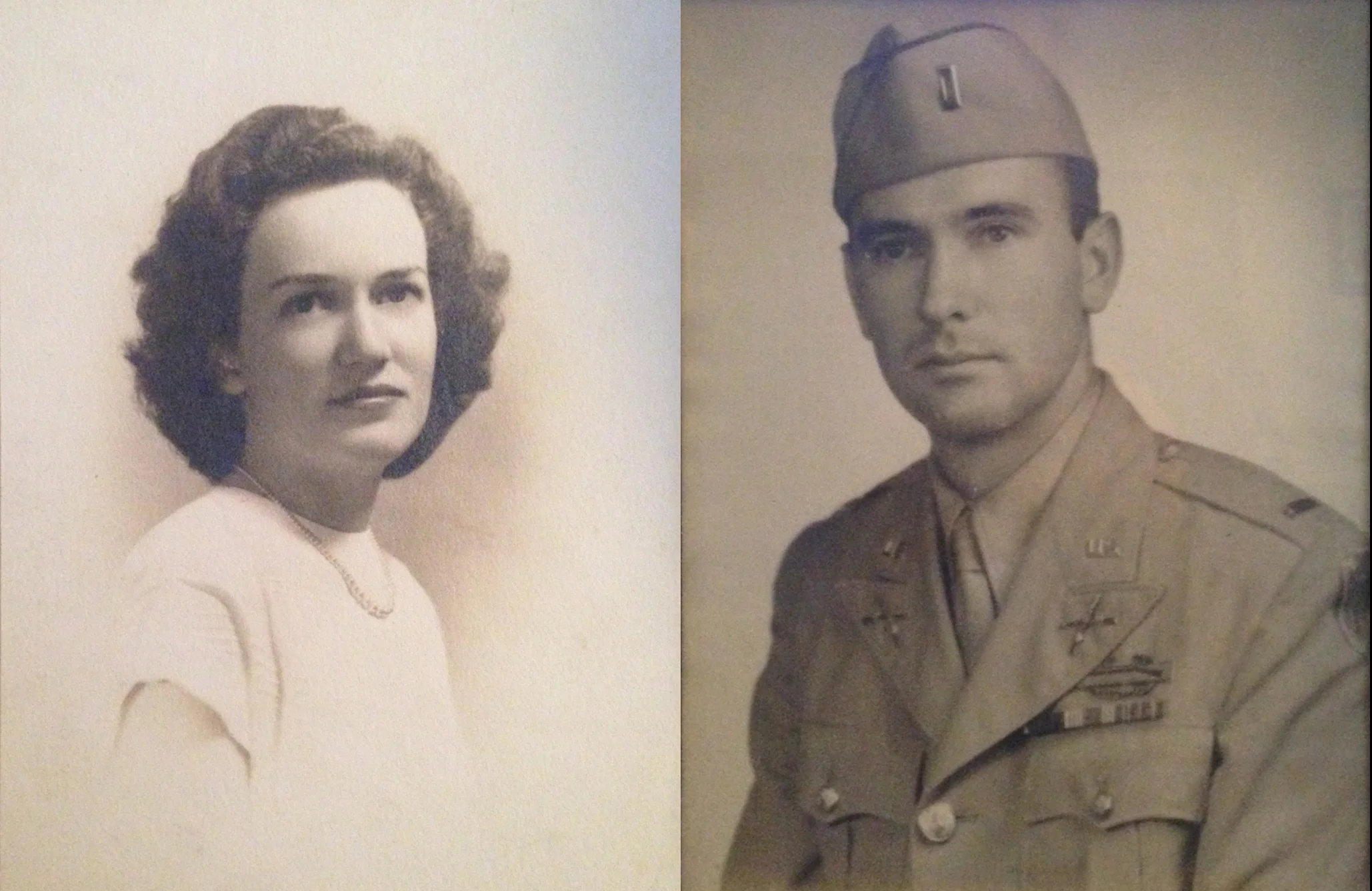
My mother would have turned 91 last week. My father died, after a long, long struggle, the day after my son's birthday. He was 94.

When I was young, I assumed the rather practical mindset that when people get old you must expect them to die. Well, of course. We will all die. The more days we have lived past say, eighty or ninety, every day is a grace, unearned, after all, because in the history of humanity, the odds were not in favor of such extended years. Both my grandmothers died when I was in elementary school, each of them    around 79 years old. Sad, of course, but I didn't know them very well. One, because I'm not sure she even knew my name and seemed to focus all of her attention on my oldest brother, something I accepted without fuss.
My other grandmother had been in some degree of senility as long as I could remember, and I am pretty sure she had no idea what my name was, either. Again, I didn't take it personally.

After all, I was in the middle numbers of their grandchildren, my parents and aunts and uncles contributed their fair share of babies to the post-war boom. When you are a middle child in such a crowd, you learn to not take much personally.

And, of course, there was the news. I was in the first grade when JFK was killed. In some ways, the years telescoped with the assassinations of Martin Luther King and then Bobby Kennedy. We were a news family, so our background noise was the rolling list of casualties every night peppered with a Walter Cronkite reporting from the jungle and young men my brothers age coming home in body bags. And, of course, the Civil Rights movement and the violence that accompanied that moved closer and closer to home.

I grew up in the bounds of New York City and we learned, as a matter of course, as part of the culture, that as carefree as our childhoods were, and we were very blessed, there was always danger, always, at any moment, something could erupt, and often did. We each had our armor, invisible, perhaps, but I know mine would be activated at any hint of danger. How else could one survive?

Last year I gave a eulogy at my father's funeral. He had been in WWII like almost every man of his generation. He landed in Marseilles in December of 1944, then sent north on a cattle car to the Ardennes, a group of virgin warriors pitted against a seasoned set of SS Troops who grew up in mountains and handled the depths of snow with ease. Most of the GIs were killed. My father survived, was promoted for heroism, then sent to Les Vosges, where his history would be marked, degrees deeper than it had already been witnessing the deaths of his friends.  

In March of 1945, just weeks before the war was to finally end, Dad was shot, several times. Life threatening, life changing. It is amazing he survived. Head, shoulder, back. 

His men said, 'we saw who shot you. We're going to get him.'  Now, there he was, bleeding out, probably dying and he forbade them to kill the young German. "Don't, do it", he commanded.

Later, when we asked about this, six children around the dinner table, after my mother told us this story (he did not talk of war, unless asked directly, and that was rare) his reply struck me, has stayed with me. "I thought of my own mother, home, worrying, praying the Rosary for me. I knew this kid's mother was doing the same."

Well, of course.

Watching the coverage of D-Day last week, of course my heart ached for the soldiers, some still teens, jumping out of planes, charging off boats, the water red with young blood. I watched out of respect and awe. I watched, mostly, as a mother.

Soon after my fathers stroke, the news again, always, was filled with soldiers deaths. I said to him, 'I feel like everyone's mother,' watching as another young life was blown up. His response, 'that's good'. I didn't argue my point that it hurts, it hurts to feel like everyone's mother when young soldiers, or street thugs, or kids in a car, or cancer victims, or any of the other heart breaking, everyone's mother detail of duty, entailed. 

But, he knew that it cost me. And it is good, in its way, that it does cost. It is the price of our humanity to enter into the suffering of each other. If every hurt is a prayer, then maybe, maybe, like my grandmother's prayers for her son kept him alive, the prayers and pains of all the mothers, and fathers, will save one soldier, one child, one struggling person another moment, another chance at grace to spare a life.

Happy Birthday Mom, Happy Father's Day, Dad.


Light Breaks Blue

Image courtesy of Frank1030's Flickr stream under Creative Commons

Image courtesy of Frank1030's Flickr stream under Creative Commons

It’s dark. He turns right, to the aurora of street lamps along Forest Park Drive, to the diluted light pushing its way through the trees that have arbored this area for generations. Wind whips up under his shirt and slaps his back. Jimmy steps out from the awning. A smoldering cigarette in one hand, an empty beer bottle in the other, he raises his arms over his head breathing in the cold, clean, wet dirt smell. His upturned face receives the sharp needles of rain. A baptism. 

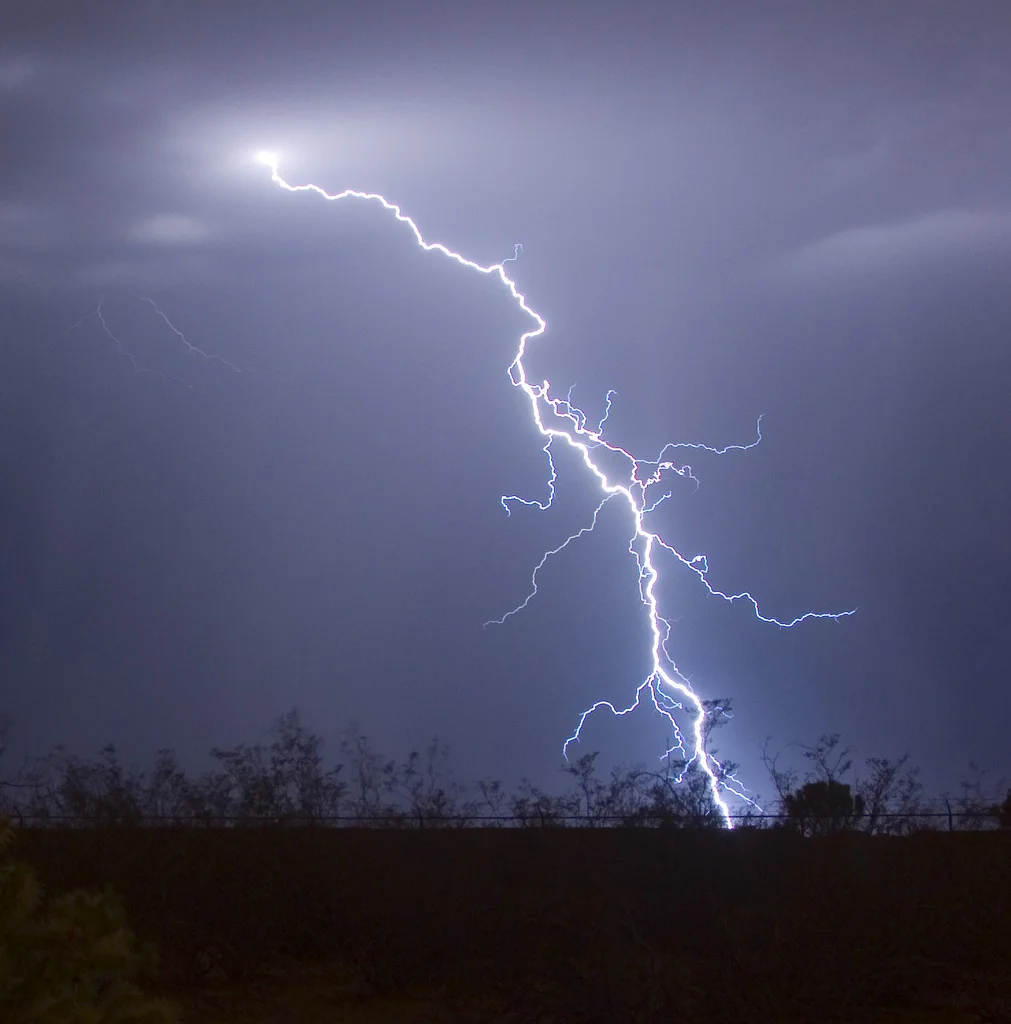
The wind and rain pick up. A crackle of light breaks blue deep into Forest Park. Thunder reverberates his thin frame, tolling out the bell of him. Somewhere in there, somewhere in here, I still am. I am.  (Chapter 58, The Narrow Gate, JBMcCullagh, 2012)

The sacramental nature of the ordinary is a recurring theme of mine. I suppose all writers have themes. A few of mine are: finding grace in the ordinary, the communion of saints, the light that darkness cannot overcome, the heroic journey and redemption, no matter how late in life we say yes to it.

In this small excerpt from my novel, Jimmy, who is in his early fifties, has reached the realization that he's been on a course of destruction for decades. There is grace and forgiveness and redemption to be had if only he will say yes to it. Even a faint hearted yes will be a start. 

I am at a disadvantage in explaining faith. On one level I know that faith cannot be argued or terrified into anyone. On the other hand, the evidence of God and redemption and the power of prayer and grace surrounds us and if we have the eyes to see and the heart to receive, it will overwhelm us beyond any need for argument or persuasion.

My disadvantage is this: I have always believed. In God, in Jesus as God, in the whole array of saints and angels. I feel confident in the use of the word always, because my understanding of this knowledge pre-dates my childhood, pre-dates my infancy, to whenever the beginning is.

I never had a Damascene moment, a falling of the horse and struck blind a la St. Paul event forcing me to recognize Jesus. I didn't have to. I always believed.

I have certainly had epiphany moments, moments of clarity and beyond the veil moments (another theme of mine) that have given me strength and courage and hope and direction. Transformational, transcendent moments that are pure gift, pure unearned gift. Grace.

Grace and belief do not spare you from struggle. The struggle of dark nights where you plead and pray and many of the Psalms seem like they were written for you. (Out of the depths I cry unto you O  Lord, Lord hear my prayer, over and over and over and over) The struggle of feeling forgotten, ignored, unanswered. No, belief does not spare you that. It reminds you to hold on, though.

The example and witness of others, be they canonized saints or some wonderful grandparent whose whole manner of life pointed the way beyond the present to the eternal, should teach us to face our struggles with hope, to remind us that we are not alone. The witness of grace in suffering and of joy in the everyday ordinary wonderful gifts of life, testify to the life giving fruits of faith.

Faith doesn't make you less stupid or even less sinful, necessarily, though I think it would give you pause by engaging your conscience and reminding you that you indeed do know right from wrong.  Faith and grace do supply the light to pierce the darkness of sin and doubt and hopelessness. They allow the light to break blue in our darkness.

Begin Each Day With A Grateful Heart

In the past few days, I have come across a small buzz on Facebook and in conversation with women sharing the word they have chosen to guide this new year. So, in place of doomed to fail New Year's resolutions, I have chosen a word.

Grateful.

Gratitude banged around my head a bit, but it wasn't quite right. Gratitude is a virtue, but I was looking for more action in my word. So, grateful moved the virtue into a state of being, an active state, an active decision.

During a handful of phone conversations I had with my mother, before Alzheimer's stole those moments completely, she often spoke of being grateful. Grateful for her wonderful husband (she said that often), grateful that they had enough, enough to eat, enough to live; enough. I was struck by that because, after all, she was in the grip of a terrible disease, and yet, she was grateful.

I must remember that.

In the years between my mother's death and my father's stroke, my father and I spoke often of how fortunate we each were to have been loved by a spouse who thought we were wonderful. My father recognized these precious qualities in my husband, and that's a pretty good nod from a father-in-law.

Every evening before we fall asleep, my husband thanks me for a lovely dinner, whether I spent real time preparing it, or we had Chinese take-out or even if he cooked (another thing to be grateful for, I married a great cook). When the meal was particularly pedestrian, I laugh, and he responds that he is thanking me because we shared the meal.

How fortunate am I? I cannot possibly calculate that answer.

So instead of counting blessings which stretch out before me and behind me and surround me in every direction. I hope to begin each day with a grateful heart.

Now, before you think I'm auditioning to be Little Mary Sunshine, this word chose me, so to speak, because I need an anti-dote to the creeping hold of ugly vices such as resentment and envy and perhaps greed. (Throw in a little sloth and there's a more complete picture of me.)

They are not called deadly sins for nothing.

If the only prayer you said in your whole life was, "thank you," that would suffice. — Meister Eckhart (1260-1329)